How Patients Choose a Dentist Online
Patients choose a dentist online by comparing location, hours, reviews, services, photos, and booking friction—often across Maps, search, directories, and the website in one session.

Patients choose a dentist online by comparing a short list of nearby practices on location and hours, recent reviews, clear services and insurance signals, real photos and provider names, and how easy it is to call or book. That comparison often happens in one sitting across Google Maps, search results, dental directories, and the practice website. Practices that look incomplete, outdated, or hard to contact lose the booking even when clinical quality is strong. This guide explains what patients actually evaluate, where the decision happens, and how to make your practice easier to choose without inventing vanity metrics.
What Patients Actually Compare Before They Call
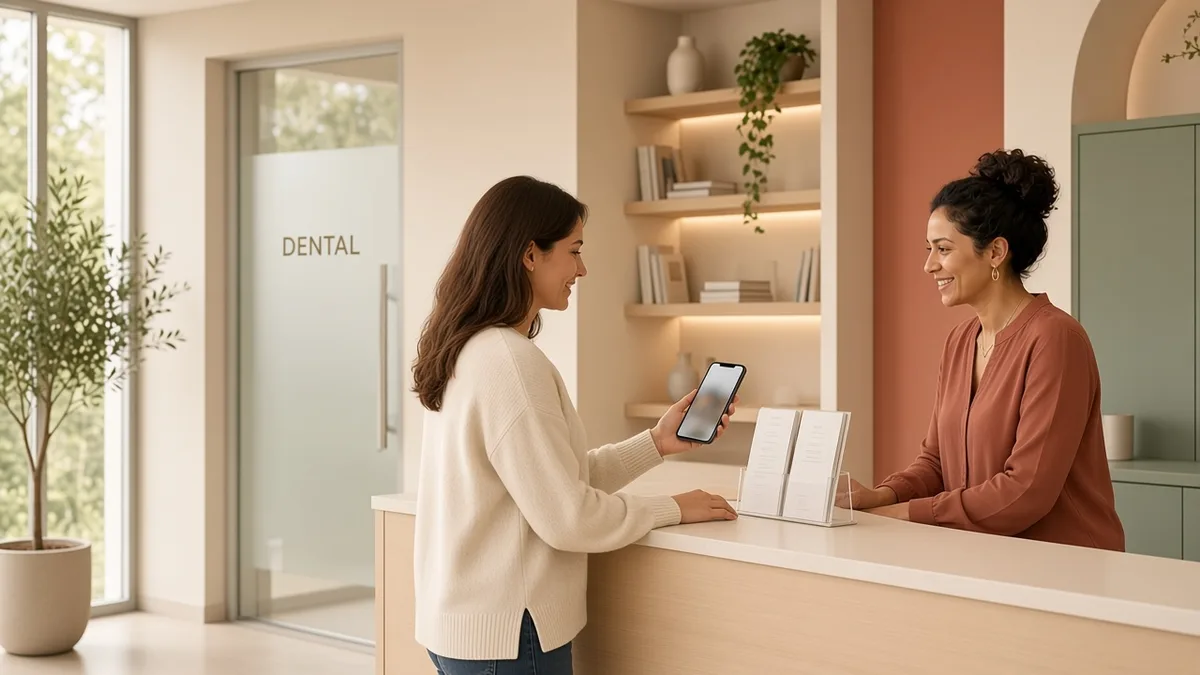
Most prospective patients do not “research dentistry” in the abstract. They try to reduce risk quickly: Is this practice nearby and open when I need care? Do other patients seem satisfied recently? Do I understand what this office offers and who works there? Can I take the next step without friction?
In practice, that comparison usually includes:
- Location and access — distance, parking cues, and whether the address looks real and consistent.
- Hours and availability — especially evenings, weekends, or same-week openings when the need feels urgent.
- Reviews and rating pattern — not only the average score, but whether feedback looks recent and specific.
- Services and fit — whether the practice clearly offers the treatment the patient is searching for (family care, implants, emergency, orthodontics, and so on).
- Trust signals — dentist names, real office photos, insurance or payment clarity where relevant.
- Contact and booking friction — a working phone number, a clear appointment path, and a sense that someone will respond.
Patients rarely articulate this checklist out loud. They eliminate options that feel confusing or incomplete and call the first practice that feels safe enough.
Related reading: Why dental leads don’t book covers what happens after someone shows interest but never reaches the schedule.
Where the Decision Happens Online
Patients do not stay on one website. A typical path mixes local search, maps, directories, and the practice’s own pages.
Google Maps and local results
For many “dentist near me” and city-plus-service searches, Google Maps and the local results block are the first shortlist. The Google Business Profile is often the first detailed view of hours, reviews, photos, and a call button. If that profile is thin, closed hours look wrong, or photos look outdated, patients may never click through to the website.
Organic search and the practice website
Patients who want more depth open the website for providers, services, and booking. The site must match what they saw in Maps—same address, phone, and service story. A polished homepage that contradicts the listing creates doubt.
Dental directories and comparison browsing
Directories help patients compare structured practice information side by side. A complete, claimed profile on Find a Dentist can reinforce hours, services, and trust when someone is still deciding among two or three options. An unclaimed or sparse listing is easy to skip. When the name, address, or phone disagrees with Google, see why conflicting practice details cost the booking. See how to claim your dental directory listing if your profile is still unmanaged.
Ads, referrals, and branded search
Paid search and social can put a practice on the shortlist, but patients still validate reputation and logistics before they book. Referral patients often still check reviews and hours online before they call. Online evaluation is part of almost every acquisition path.
How Reviews Shape the Shortlist
Reviews influence both discovery and conversion. Patients use them to answer a practical question: “If I book here, what is the experience likely to be?”
Useful review signals for a dental practice include:
- Recency — a steady stream of recent reviews often reassures more than a large pile from years ago.
- Specificity — comments about wait times, front-desk communication, or chairside manner feel more credible than vague praise.
- Response quality — professional replies show the practice is active and accountable (without exposing patient details).
Review strategy should stay ethical. Ask genuine patients for honest feedback through a consistent process. Do not incentivize ratings, and do not selectively push only happy patients to public review sites. Reputation work is part of how patients choose a dentist online—not a separate vanity project.
Why Incomplete or Inconsistent Practice Information Loses Bookings
Patients treat mismatched details as a warning. Common friction points:
- Different phone numbers across Maps, the website, and a directory
- Hours that conflict with what the front desk actually works
- Services listed in ads or directories that the office does not offer
- Missing dentist names or stock photography that does not match the real office
- Appointment links that 404 or drop the user on a generic homepage
Inconsistency does not only hurt search systems. It raises the chance a patient picks the competitor whose information is simply clearer.
Illustrative decision path (example only)
The path below is an example, not a universal patient journey.
Assume three nearby general practices appear in Maps for “dentist near me”:
- Practice A: strong rating, but hours look outdated and the appointment link fails
- Practice B: fewer reviews, complete hours, real photos, clear call button
- Practice C: incomplete address details and no recent reviews
Many patients will try Practice A first, hit friction, then call Practice B within minutes. Practice C never enters the conversation. Clinical quality at A may be excellent; the online decision still favored the practice that was easier to trust and contact.
How to Make Your Practice Easier to Choose
Treat online choice as an operational checklist tied to booked appointments—not a one-time marketing project.
- Align core facts everywhere. Practice name, address, phone, website, and hours should match across Google Business Profile, your website, and major directories.
- Complete the Google Business Profile. Categories, services, photos, posts, and a working appointment or call path matter as much as the star rating. Start with the Google Business Profile for dentists guide if that asset is incomplete.
- Claim and complete directory profiles. Structured listings help patients compare you fairly. Claim and update your Top Dentistry directory listing so services, hours, and inquiry handling are under your control.
- Make booking friction visible and fixable. Test call buttons, forms, and online scheduling on a phone. If leads arrive but do not book, diagnose conversion leaks separately—see why dental leads don’t book.
- Keep reputation current. A consistent, ethical review request workflow after eligible visits keeps the public story up to date.
- Measure what choice produces. Track calls, form starts, and booked new patients from Maps, organic, directory, and paid—not rankings alone. Dental SEO and GEO services matter when visibility is the gap; a free practice audit helps when you need a clear read on what is costing bookings.
Local marketing tactics still matter—community presence, partnerships, and brand familiarity—but they work best when the online shortlist experience is already coherent. For the broader local playbook, see local dental marketing.
Frequently Asked Questions
How do patients choose a dentist online?
Patients typically shortlist nearby practices, then compare hours, reviews, services, photos, provider information, and how easy it is to call or book. The decision often spans Google Maps, search results, directories, and the practice website in one session. The practice that feels clear, current, and easy to contact usually wins the call—even before a clinical conversation begins.
What matters more—reviews or website design?
Both matter, but they solve different questions. Reviews help patients judge recent experience and trust. The website and booking path help them confirm fit and take action. A beautiful site with weak or outdated reviews, or strong reviews with a broken appointment link, both lose conversions. Fix the weakest link on the path from discovery to booking.
Do dental directory listings still matter if we have Google?
Yes, when they present accurate, complete practice information where patients compare options. Directories do not replace Google Business Profile, but they reinforce NAP consistency, services, and trust signals. An unclaimed or incomplete listing can create doubt or outdated details that patients still encounter.
How quickly do patients decide after searching?
Many patients decide within a single research session—especially for urgent or time-sensitive needs. That is why incomplete hours, slow phone response, and broken booking links are expensive. Practices should assume the shortlist is small and the window to look credible is short.
What should a practice fix first to win more online choices?
Start with accuracy and contact: consistent NAP and hours, a complete Google Business Profile, working call and appointment paths, then recent ethical reviews and clear service pages. Expanding content or ads before fixing those basics often sends more people into the same confusing experience.
Make the Online Choice Easy to Say Yes To
Patients choose a dentist online by eliminating uncertainty. Clear location and hours, recent reputation, complete practice information, real trust signals, and a frictionless next step beat vague claims of being “the best.” Top Dentistry helps practices present accurate, discoverable profiles—through Find a Dentist, claimed listings, and local visibility work—so the patients already comparing you can book with confidence.
Turn insights into booked chairs
Practical dental marketing only works when it fills the schedule — get a free practice audit and a clear next step.
No pitch deck. A practical read on where patients drop off.