How to Build a Dental Patient Referral Program That Books
A dental patient referral program turns satisfied patients into booked visits with a clear ask, simple tracking, and cost-per-booking math.

A dental patient referral program is a repeatable system that turns satisfied patients into booked new-patient visits—with a clear ask, a simple offer, and tracking that ties each referral to a scheduled appointment. It matters because word of mouth already influences shortlists, but without a program those introductions stay accidental and unmeasured. Practices that only run ads while ignoring referrals leave a low-cost acquisition channel idle. This guide defines what counts as a program versus passive goodwill, when and how to ask, how to keep the offer and tracking simple, how to read a labeled cost example, and how to compare referrals with other channels using the same booked-patient math.
A Referral Program Is Not Passive Word of Mouth
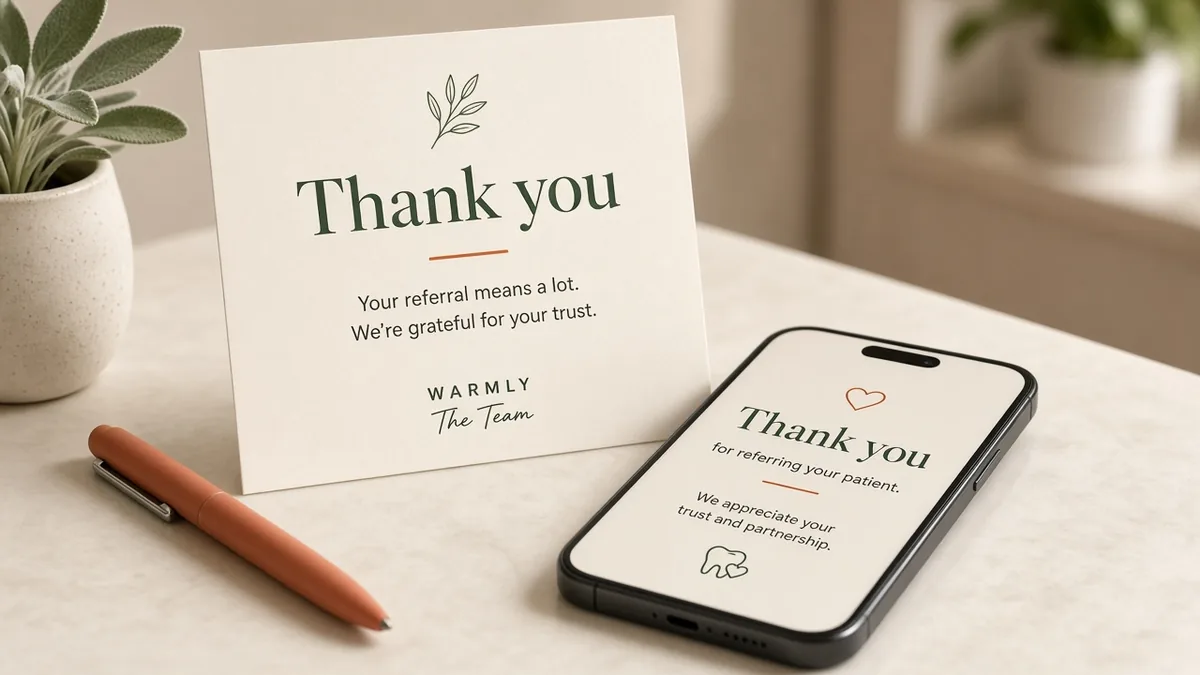
A dental patient referral program has an owner, a script, a way to capture who referred whom, and a definition of success: a booked appointment from a referred patient. Passive word of mouth—someone mentioning the office at dinner—is valuable but invisible. The practice cannot improve what it cannot count.
A working program usually includes:
- Moments when the team asks (after a great visit, after a completed plan, at hygiene check-out)
- Language that makes the ask easy (“Who else in your family needs a dentist they can trust?”)
- A simple thank-you or incentive that fits ethics, state rules, and the practice brand
- A field in the PMS or lead log for referrer name and source = referral
- A monthly review of referred bookings and cost per referred booking
Do not confuse a stack of lobby cards with a program. Cards without training, timing, and tracking rarely move the schedule. How patients choose a dentist online still applies: referred patients often verify hours, reviews, and a booking path before they call—so the website and Google Business Profile must not undo the introduction.
Ask When Trust Is Highest
Referral asks fail when they feel like a sales pitch at the wrong moment. Ask when the patient has just experienced a clear win: pain resolved, a smooth new-patient visit, a completed restorative visit, or a hygiene visit where they praised the team.
Train every role that touches check-out:
- Dentist or hygienist names the win in plain language.
- Coordinator makes one specific ask — family members, coworkers, or a neighbor looking for a dentist—not “tell everyone about us.”
- Front desk captures the referrer if the patient names someone, and offers an easy next step (share the booking link or practice card).
Speed still matters after the referred person reaches out. A warm introduction that sits in voicemail for two days becomes a cold lead. Why dental leads don’t book applies to referred inquiries the same way it applies to paid ones.
Keep hygiene recall and reactivation separate from referral asks. Dental patient reactivation targets inactive patients you already know; a dental patient referral program targets new people introduced by active patients. Mixing both lists on one call block confuses the script and the metric.
Keep the Offer and Tracking Simple
Complicated reward ladders kill follow-through. A dental patient referral program works when the offer is easy to explain in one sentence and legal for your jurisdiction. Many practices use a thank-you gift, account credit, or charitable donation—confirm what your state and professional rules allow before promising cash or fee discounts.
Tracking rules that keep the program honest:
- Record referrer name on every new-patient referral
- Mark source as referral in the same place you mark Google Ads or website
- Count a success only when the referred patient books (and optionally when they complete the first visit)
- Cap or audit rewards so staff cannot invent referrals
If the practice cannot name how many bookings came from referrals last month, the program is still aspirational. Pair referral cost with cost per booked dental patient so leadership compares channels with one definition of a booked patient.
Illustrative Referral Funnel Math (Example Only)
The numbers below are an example, not an industry benchmark. Markets and case mixes differ.
Assume one month in a general practice:
- Active patients who received a clear referral ask: 120
- Patients who named or sent at least one person: 24 (20% of asks)
- Referred people who inquired: 18
- Booked new-patient appointments from those inquiries: 12
- Program cost (cards, thank-you gifts, staff time allocated): $600 (example)
Then:
Cost per booked referred patient ≈ $600 ÷ 12 = $50
If only 6 of 18 inquiries book, cost per booked referred patient doubles to $100 on the same program spend—usually a front-desk or booking-path problem, not a “need bigger gifts” problem.
Compare that cost to paid channels using the same booking definition. Model first-year value in the patient lifetime value calculator before treating any referral cost as “too high” or “cheap enough.”
Measure Referrals Like Other Acquisition Channels
A dental patient referral program earns budget when it reports the same outcomes as ads and SEO: inquiries, bookings, cost per booking, and show rate.
Track monthly:
- Referral asks delivered (or patients touched by the script)
- Referred inquiries
- Booked referred patients
- Cost per booked referred patient
- First-visit completion rate for referred patients
- Top referrers (so thank-yous stay personal)
When referral volume is high but bookings are low, fix answer rate and scheduling before redesigning gifts. When bookings are strong but asks are rare, coach check-out timing. When one hygienist drives most referrals, document their script and train the rest of the team.
Top Dentistry helps practices judge acquisition—including referrals—against booked patients and revenue, not vanity traffic. Use the marketing ROI calculator once you have referral spend and booking counts side by side with other channels.
Frequently Asked Questions
What is a dental patient referral program?
A dental patient referral program is an intentional process for asking satisfied patients to introduce others, capturing who referred whom, thanking referrers within your rules, and measuring booked appointments from those introductions. It differs from hoping word of mouth happens on its own.
Do referral programs replace Google Ads or SEO?
Usually no. Referrals often produce high-trust patients at a lower cost per booking, while ads and SEO expand reach beyond your current patient base. Most growing practices run a dental patient referral program alongside paid and organic channels and compare them with cost per booked patient.
What incentive should a dental practice offer for referrals?
Choose something simple, allowed in your state, and easy to fulfill—often a thank-you gift, account credit, or donation. The ask and the booking path usually matter more than an expensive reward. Confirm professional and legal limits before promising cash or treatment discounts.
When should the team ask for a referral?
Ask after a clear positive moment: a smooth new-patient visit, completed treatment the patient is happy with, or a hygiene visit where they praised the experience. Avoid asking during billing disputes, rushed emergencies, or when the patient is still undecided about care.
How do you track dental referrals accurately?
Log referrer name and source on every referred new patient in the PMS or lead system, count bookings—not “someone said they would tell a friend”—and review the list monthly. Without that field discipline, referral ROI stays a guess.
Turn Happy Patients Into Booked Referrals
A dental patient referral program works when the practice asks at trust peaks, keeps the offer simple, tracks referrers to booked appointments, and judges the channel with the same cost-per-booking math used for ads. Stop treating referrals as luck. Build the ask, the log, and the monthly review—then scale what books.
Top Dentistry helps dental practices connect acquisition channels to scheduled patients and clear ROI math so referral volume is measured alongside SEO and ads—not left as an anecdote.
Turn insights into booked chairs
Practical dental marketing only works when it fills the schedule — get a free practice audit and a clear next step.
No pitch deck. A practical read on where patients drop off.